
Day 0Email 1 of 5
Welcome: turn the pitch into a short course
The first email doesn't sell a bulb. It introduces Sunsy, promises a free four-lesson course on light, and previews every lesson so the rest of the flow is expected. A short note from the founders puts a real face on the brand early.
What this email does
- Frames the whole flow as a course, not a sales pitch
- Previews all four lessons, so every future email has a reason to be opened
- A short founder note builds a human connection from day one
Most of us have never been taught about light.
That's about to change. Over the next week we're going to walk you through what your eyes, your skin, and your brain actually want from the bulbs in your house.
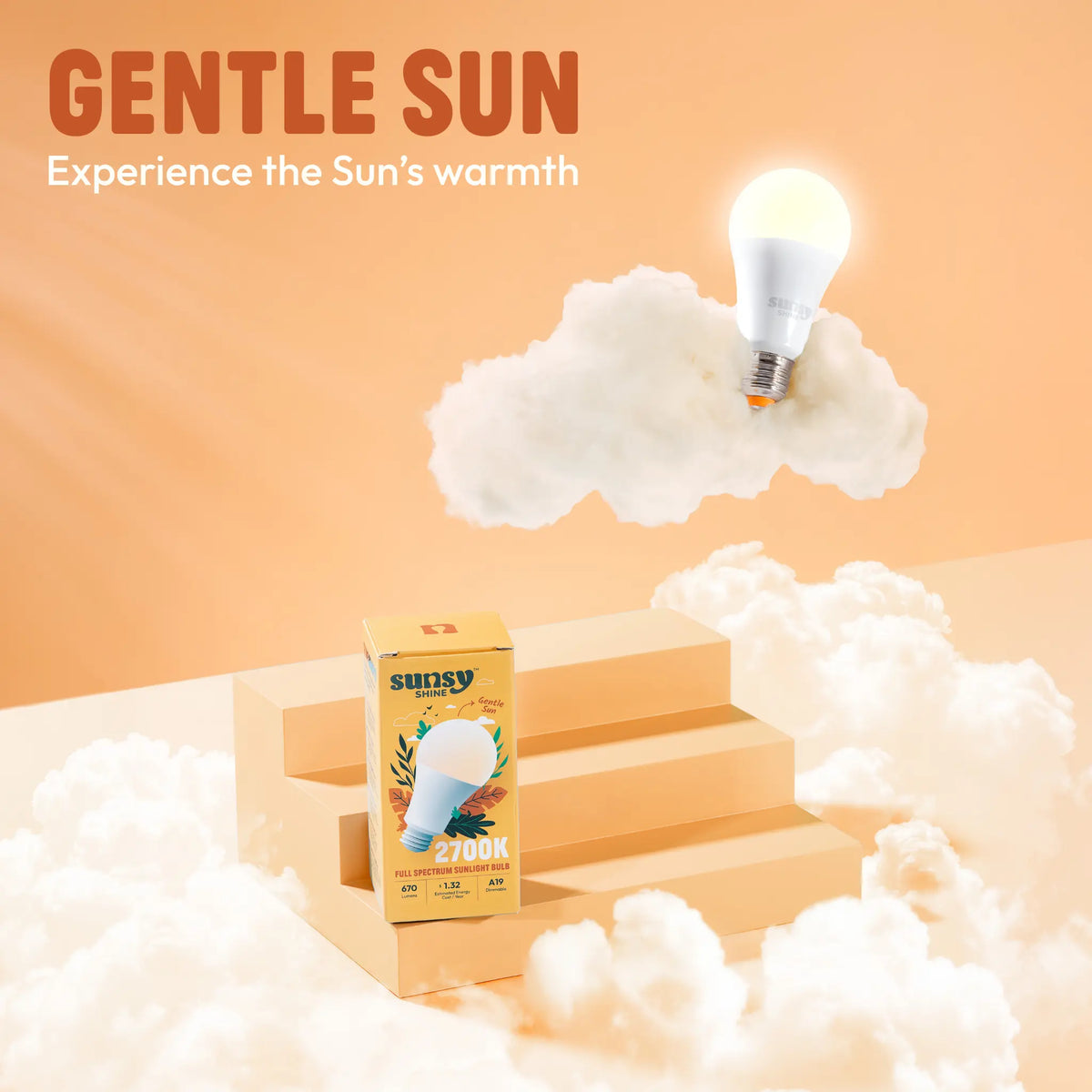
We're Sunsy. We make light bulbs that mimic natural sunlight. Hi 👋.
But we don't really want to sell you a bulb yet. Honestly, the product is the easy part. The reason we exist is more interesting than that — and once you know it, the bulbs sort of explain themselves.
The next 4 emails

"We started Sunsy because we couldn't find a bulb that felt like sunlight. The deeper we dug, the more we realized most people have been sold lights that work against them. So we made the one we wished existed — and now we'd like to share what we learned getting here."
— Derek & Malissa, founders
"After all, the Sun doesn't flicker. Neither should your lights."
Shipping
Returns
Warranty
Test Data
Day 2Email 2 of 5
Lesson 1: why we're wired for sunlight
Before talking about any product, the flow makes the reader care about light itself. It explains how the eye tells the body what time it is, backs that up with three hard numbers, and ends on the idea Sunsy is built on: if we can't live outside, we should bring the right light in.
What this email does
- Leads with the problem, not the product
- Hard numbers with named sources carry the authority
- Closes on the brand's core premise in a single line
Why we're wired for sunlight.
Light isn't just illumination. It's the cue our bodies have used to keep time for the last few million years.

Step outside on a clear morning and you don't just see the sun — you feel it. Your alertness lifts. Your mood does too. Your eyes relax.
That's not poetry. There's a tiny set of cells in your retina — ipRGCs — whose only job is to read incoming light and tell your brain what time of day it is. They control melatonin. Cortisol. Body temperature. Sleep.
What we lose indoors
Almost everything. Indoor light is roughly 1/20th as bright as a sunny afternoon. It's missing wavelengths the sun has in abundance. And it doesn't shift across the day the way sunlight does.
Your body still expects sunlight. When it doesn't get it, the consequences are quiet but real: harder sleep, lower mood, foggier days.
If we can't bring our biology outside, we should at least bring the right light in.
Shipping
Returns
Warranty
Test Data
Day 4Email 3 of 5
Lesson 2: what “full spectrum” actually means
Now the reader gets the vocabulary to judge any bulb, including a competitor's. Three plain-English definitions, a spectrum chart, and the same fruit photographed under two different bulbs show the difference instead of just claiming it.
What this email does
- Teaches three terms: spectrum, CRI and TM-30
- A side-by-side photo does the persuading
- Flags that “full spectrum” isn't a regulated term, then points to Sunsy's lab report
What "full spectrum" actually means.
White light isn't one color — it's all of them, mixed. The way a bulb mixes those colors decides everything else.
Three terms worth knowing
What a bulb's spectrum actually looks like
Two bulbs can hit the same brightness and the same color temperature, but emit completely different spectra. That difference is why one room feels alive and another feels fluorescent.
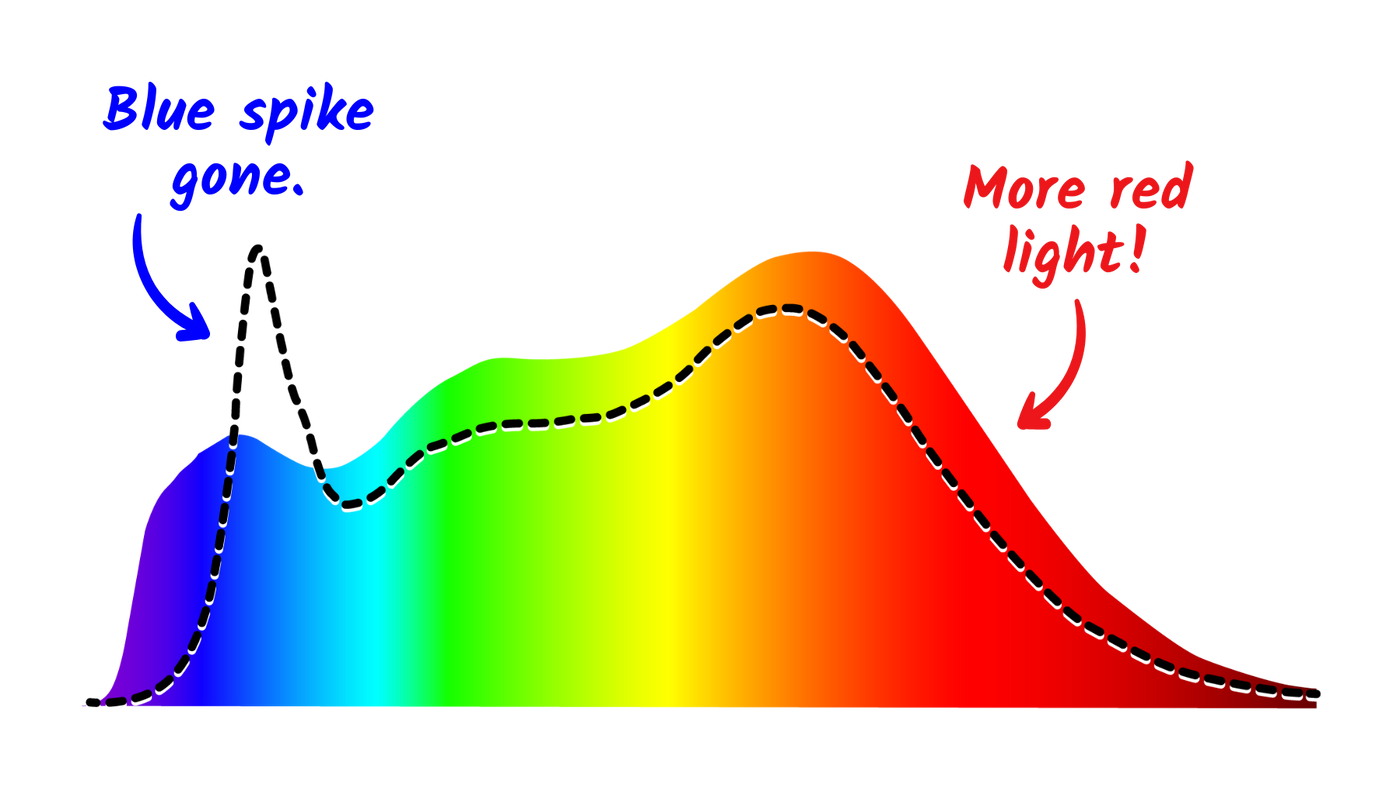
Top: a typical LED. Notice the blue spike and the dip in the cyan-red band — the missing wavelengths your eyes use to judge true color.
Bottom: Sunsy Shine. Smooth across the visible spectrum, like sunlight.
You can see the difference
Same fruit. Same camera. No filter. The only difference is the bulb shining on it.


A small warning
"Full spectrum" isn't a regulated term. Anyone can print it on a box.
The honest version is to publish the actual test data — CRI, TM-30, the spectral chart. We do, for every bulb we sell. See the full lab report →
Shipping
Returns
Warranty
Test Data
Day 6Email 4 of 5
Lesson 3: the hidden noise in your lights
This email names a problem most readers didn't know they had: LED flicker. It explains why cheap bulbs flicker, what the research says it does to people, and how Sunsy measures against the IEEE's published guideline, even when dimmed.
What this email does
- Reveals an invisible problem, then explains the cause
- Lays out the effects without overpromising
- One hard number against a published standard: under 1% flicker
The hidden noise in your lights.
Most LEDs flicker around 100 times per second. You can't consciously see it. Your nervous system can.
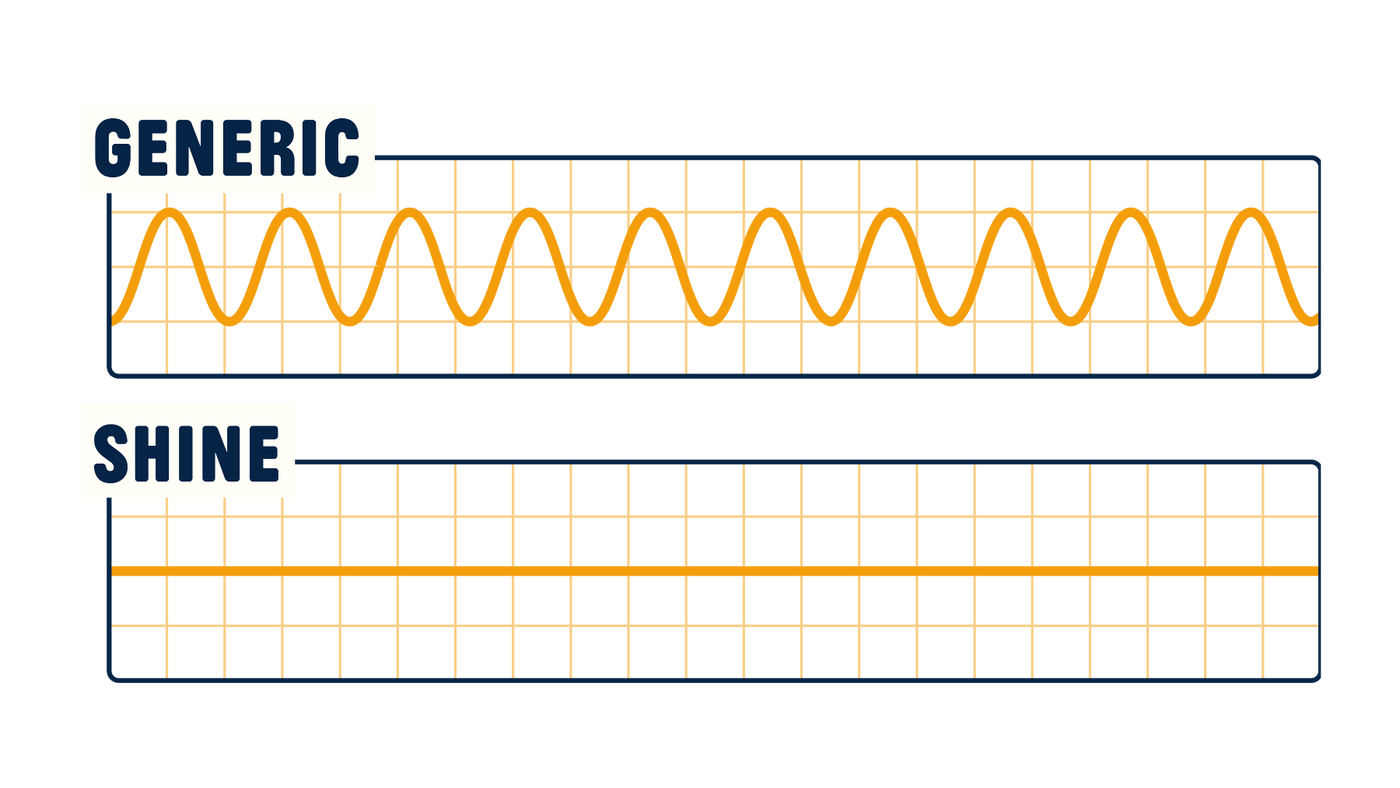
Top: a typical LED, pulsing roughly 120 times per second.
Bottom: Sunsy Shine, measured at less than 1% flicker. Effectively a flat line.
Why this happens
Wall current alternates 60 times a second. Cheap LED drivers convert that to DC poorly — so the light "flicks" with the AC waveform. It's the difference between a cheap power supply and a clean one.
Your conscious vision tops out around 60–90 Hz. But your subconscious visual system reads light at 200+ Hz. Which means even though you don't see the flicker, your brain is processing it.
What it does
The research is still developing, but here's the consensus from the lighting and ophthalmology communities:
A note on dimming
Many bulbs that pass flicker tests at full brightness fail dramatically when dimmed. That's because most dimmers chop the AC waveform. We use a constant-current driver — flat at 100%, flat at 10%.
Shipping
Returns
Warranty
Test Data
Day 8Email 5 of 5
Lesson 4: a field guide to using light
The last lesson turns everything into a room-by-room plan, which introduces Sunsy's three bulbs as the natural answer. Only then does the flow make its one sales ask, and it's a gentle one: explore the store, with every lab report attached.
What this email does
- One simple rule: cooler light by day, warmer at night
- A room-by-room cheat sheet maps each bulb to where it belongs
- The flow's only sales button, with no discount and no urgency
A short field guide to using light.
You know the biology and the science now. Here's how to actually apply it in your home.
The simple rule
Sunlight shifts across the day. Cool and blue at noon. Warm and golden in the evening. Your body uses that shift to time everything from alertness to sleep.
So: cooler light during the day, warmer light in the evening. Match what's outside.
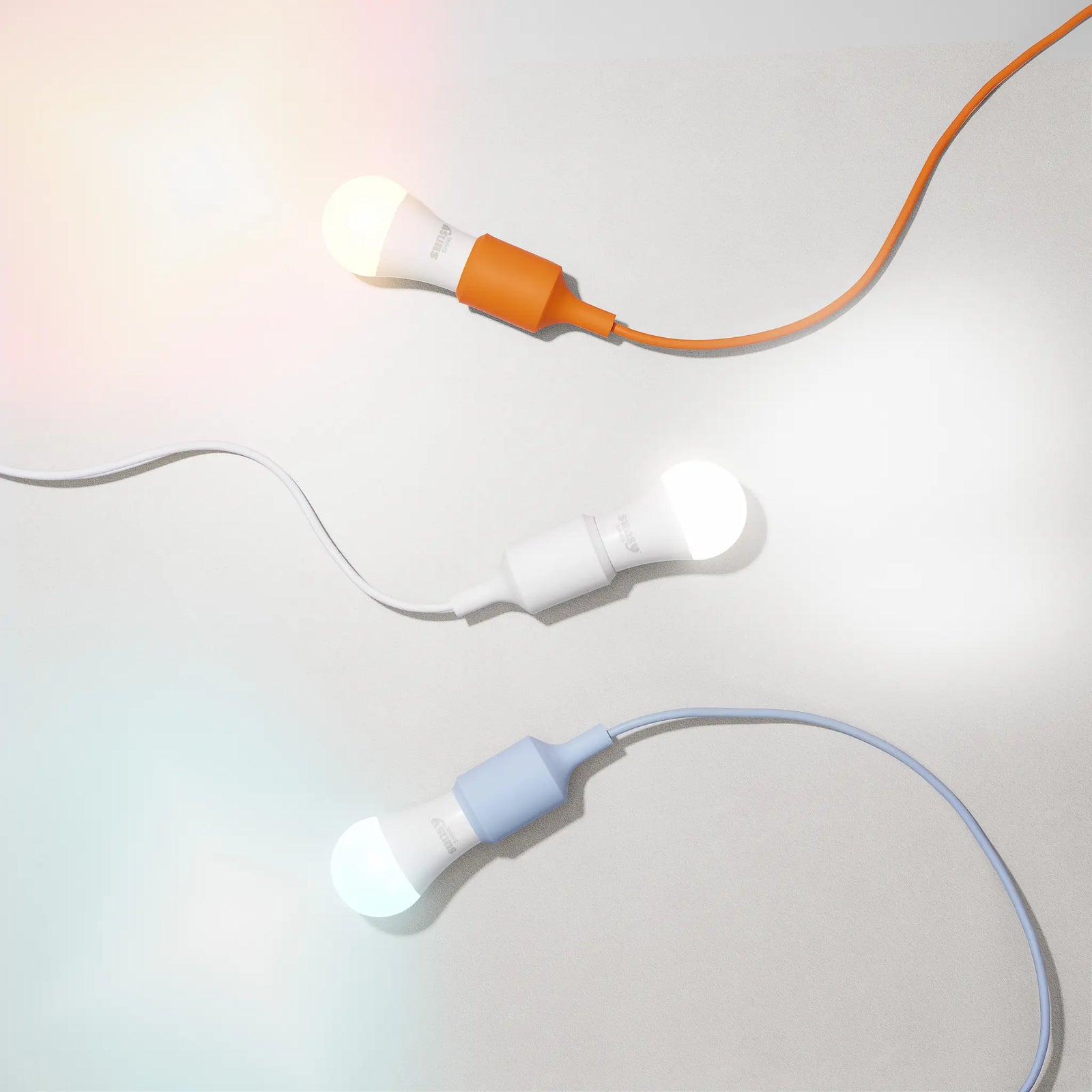
The three temperatures we make
Warm, golden, the color of incandescent light. The right call for living rooms, bedrooms, and anywhere you wind down. Won't suppress your melatonin.
Neutral white. The all-rounder. Great for kitchens, offices, bathrooms — anywhere you need to see clearly without it feeling clinical.
Cool, bright, the color of midday sun. Use it where you need full alertness — workshops, studios, garages, or your morning desk.
A room-by-room cheat sheet
That's the whole curriculum.
You now know more about light than 95% of people who buy bulbs. If you'd like to put any of it into practice, our store has every test report attached.
$25 a bulb. Free shipping always. 60-day returns. 3-year warranty. Read the lab reports first →
"Thanks for letting us nerd out at you for a week. Whether you buy a bulb or not — we're glad we got to share this."
☀️ — Derek & Malissa
Shipping
Returns
Warranty
Test Data